ByJohn A
How Token Supply Affects Value
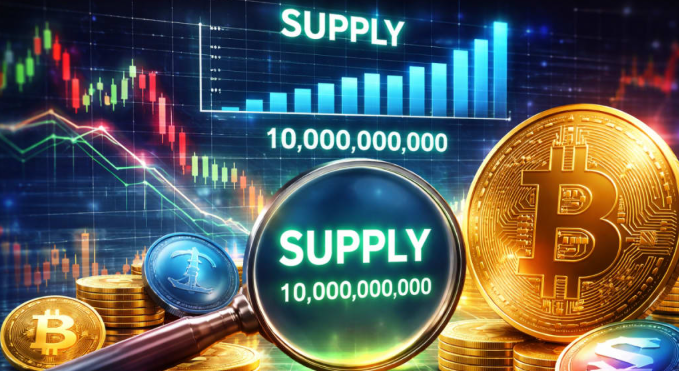
Token supply shapes value through scarcity, distribution, and market dynamics. Total and circulating supply define available units and potential price pressure, while emission and burn mechanics alter future scarcity expectations. Concentration of holders and governance rights influence liquidity and resilience, affecting perceived fairness. Velocity adds a dynamic layer, where rapid turnover signals demand under limited supply. Probabilistic models weight these factors to forecast risk-adjusted returns, offering a framework that invites further examination as market structures evolve.
Define Token Supply and Its Impact on Value
Token supply refers to the total quantity of tokens available in a given ecosystem, including circulating supply and any tokens held in reserve or non-circulating wallets.
The analysis quantifies token dynamics and their effect on value, emphasizing how scarcity metrics shape risk-adjusted expectations.
Probabilistic models suggest limited supply correlates with upside potential, while distribution patterns influence liquidity and perceived freedom within markets.
See also: playmyworldcom
Inflationary vs. Deflationary Designs: Incentives in Practice
Inflationary and deflationary token designs shape incentives through distinct emission and burning mechanics that directly impact expected returns and risk profiles.
The analysis compares inflationary incentives, where supply growth shifts payoff expectations and introduces higher uncertainty, with deflationary dynamics, where scarcity tends to compress risk and potentially elevate marginal value.
Probabilistic assessments emphasize distributional effects and resilience under varying demand.
A Practical Framework to Measure Scarcity: Schedules, Velocity, and Value
A practical framework for measuring scarcity centers on three interrelated dimensions: emission schedules, on-chain velocity, and their combined impact on value. This analysis treats scarcity signals as data-driven indicators and examines velocity dynamics under stochastic conditions, quantifying probabilities of price pressure shifts. The framework enables disciplined assessment, supporting prudent decisions while preserving freedom to adapt to changing market structures.
Token Supply Due Diligence: a Checklist for Evaluating Projects
Assessing token supply requires a disciplined, data-driven checklist that maps emission schedules, circulating supply, and potential future dilutions to likely value trajectories.
The analysis centers on token distribution patterns and governance mechanisms, evaluating distributional fairness, concentration risk, and control rights.
Probabilistic projections quantify risk-adjusted returns, while governance signals illuminate decision-making flexibility and resilience against sudden dilution, enabling informed, freedom-oriented project assessments.
Conclusion
In sum, token supply interacts with velocity, distribution, and governance to shape value probabilistically. Inflationary designs may dampen near-term returns but can sustain network activity; deflationary mechanics can amplify scarcity-driven gains yet risk illiquidity. A practical framework—tracking supply schedules, turnover, and holder concentration—enables prudent risk-adjusted projections. For diligence, perform a structured checklists across issuance, burn mechanics, and macro conditions. The conclusion: supply is a probabilistic lever, not a deterministic fate, guiding disciplined, data-driven judgments—like forecasting with a digital almanac, circa 1985.